
Case packers built around your carton, not the other way round
Top load, wrap around, gravity drop, delta robot and articulated robot — five working principles, one engineering team. We start from the carton you already buy and the product you already sell, then pick the principle that fits. No carton redesign, no forced upgrade path.
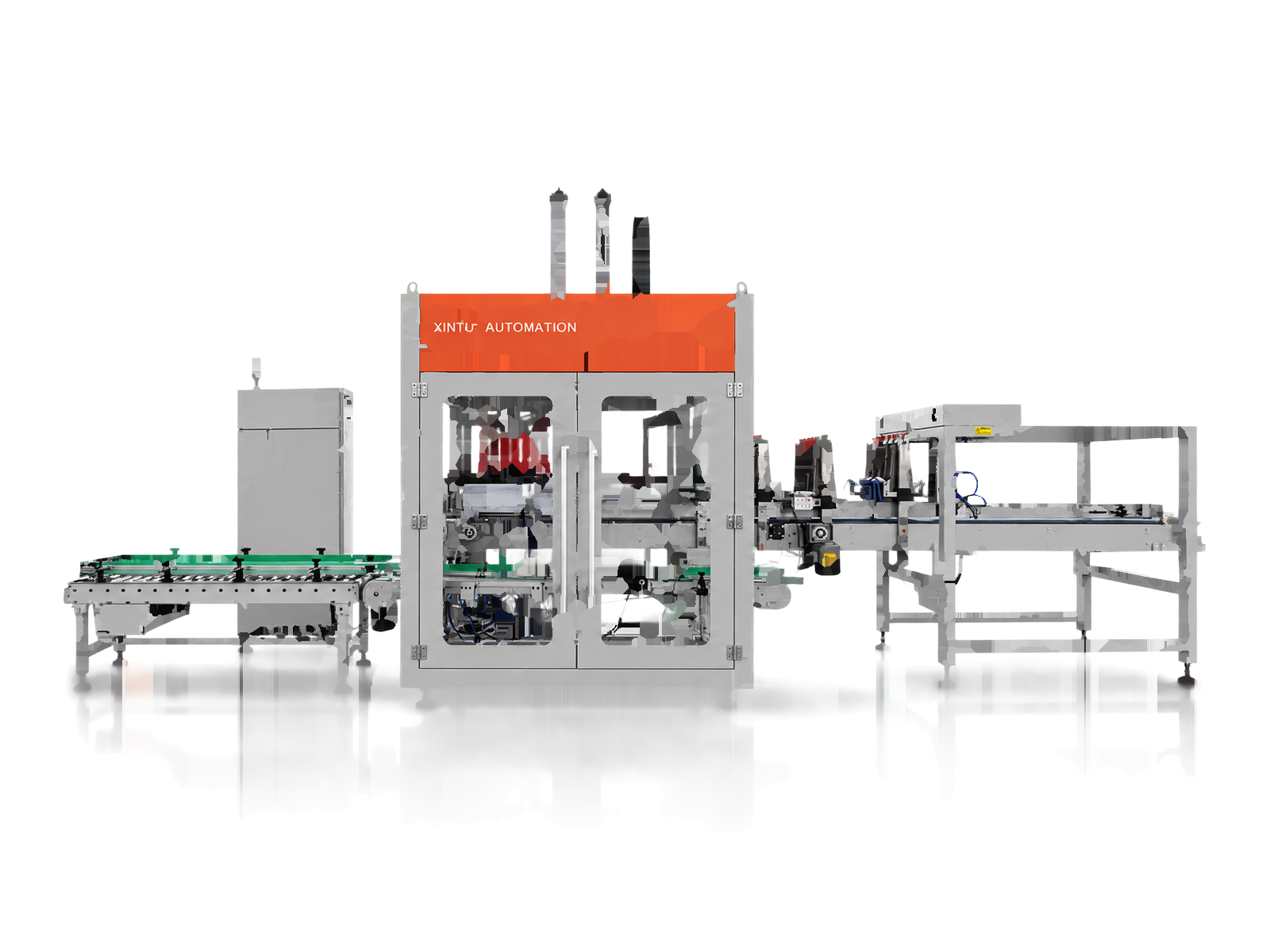
Machine types in one
engineering family
CE-certified model
codes across the range
Carton formats handled
without redesign
Team from carton audit
to line commissioning
Six types, one question: how does the product enter the carton?
The working principle decides almost everything downstream — cycle rate, carton style, floor space, and how gently the product is handled. Read across the row for the type that matches your product, then follow the model code to its detail section.
- Cycle rating is relative within this range, not an absolute figure
- Model code links to the detail section below
- All six share the same CE certificate family — see the model table
Three mechanical families, six ways to fill a carton
Grouped by how the product is moved: lowered from above, dropped through the top, or picked by a robot. The family tells you the mechanics; the model tells you the carton.
Top Load Case Packer
Product descends into an already-erected carton
- Carton is erected and held square before anything enters it
- Product is lowered, never dropped — glass and liquids survive
- Top flaps close last, so the pack pattern stays as loaded
- Handles bottles, jars, cans, tubs and stand-up pouches on one head
Wrap Around Case Packer
Flat blank folded around the collation
- One-piece blank — no separate body gluing, no erected-carton magazine
- Blank is stored flat, so board stock takes a fraction of the floor space
- Tight collation holds the product without internal dividers
- Lowest board consumption per case of any type in the range
Gravity Drop Case Packer
Product released into the carton from above
- Simplest mechanism in the range — fewer moving parts to maintain
- No gripper head, so no changeover tooling between product sizes
- Works with rigid packs, sachets, blister cards and bagged goods
- Best throughput per unit of floor space when the drop is acceptable
Delta Robot Case Packer
Overhead pick and place into a pattern
- Fastest cycle in the range — built for loose, single-file product flow
- Vision-guided pattern filling, so multi-compartment layouts need no fixture
- Each pick is independent: a missed item never stops the pattern
- Ideal when the pack pattern changes more often than the product does
Robotic Case Packer
Six-axis arm with task-specific end-of-arm tooling
- One arm absorbs a wide SKU mix — the answer to high-variety production
- End-of-arm tooling is swapped, not the whole machine, between products
- Handles weight and awkward geometry that a delta cannot lift
- Carton style is nearly free: RSC, tray, tote or returnable crate
Packing Line
Erecting, packing, sealing and discharge as one line
- Any of the five packers above becomes the heart of the line
- Single control system across erecting, packing and sealing
- One supplier, one commissioning window, one point of contact
- Line model codes carry the packer code inside them — see the table
What each machine actually does to your product
Same engineering standard across all six. What changes is the moment the product leaves your conveyor and meets the carton — that is where the choice is made.
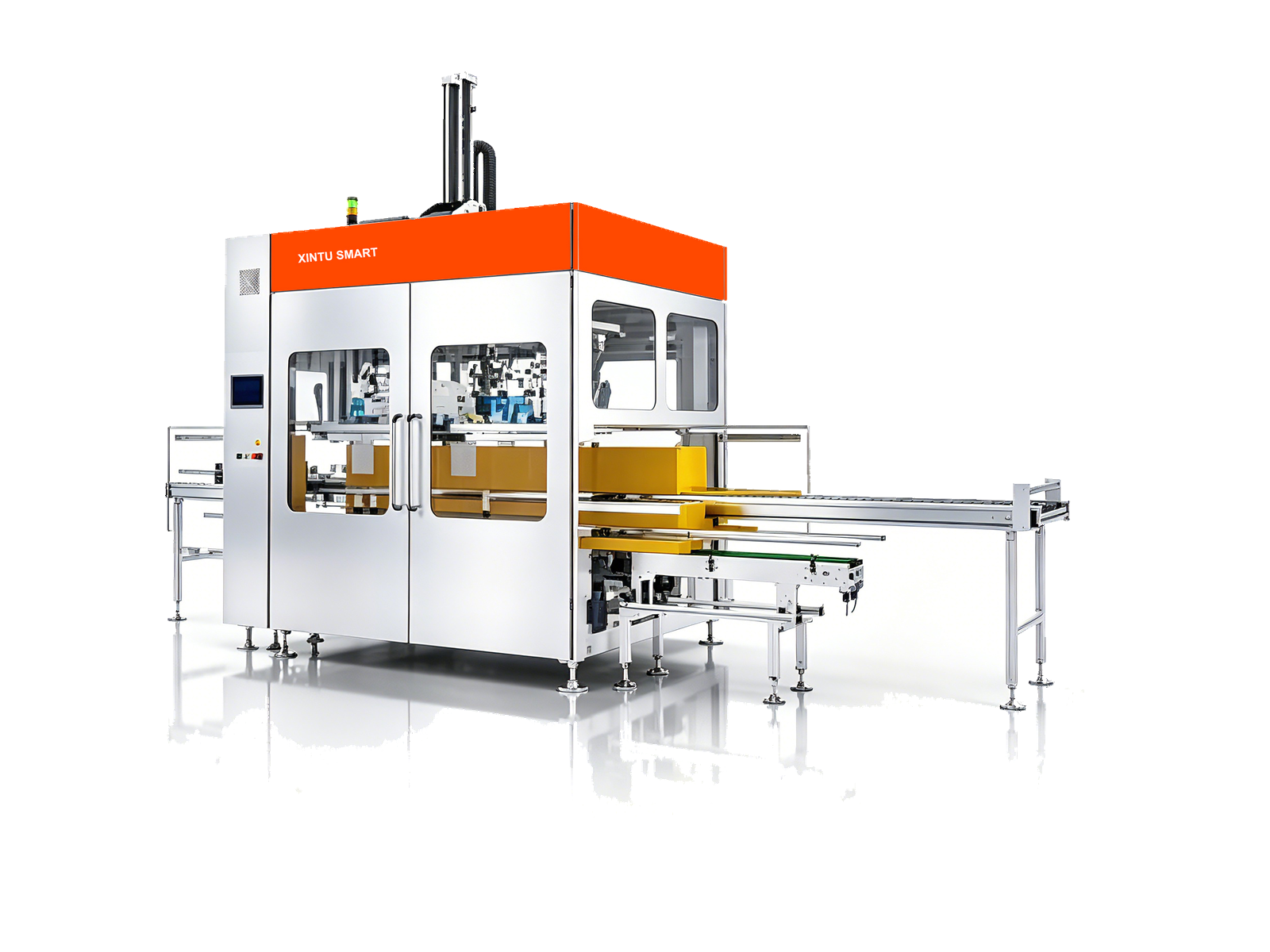
Top Load Case Packer — XT-TCP01
The carton is erected, squared and held in position first. Only then does the product descend into it. Nothing is ever dropped, so glass, filled liquids and soft-wall containers arrive at the sealer in the condition they left filling.
- Carton is held square during loading — no bulging, no crushed corners
- Lowering head matches your pack pattern, so the collation is preserved
- Top flaps are the last thing closed, keeping the load exactly as placed
- Suits bottles, jars, cans, tubs and stand-up pouches with one head design
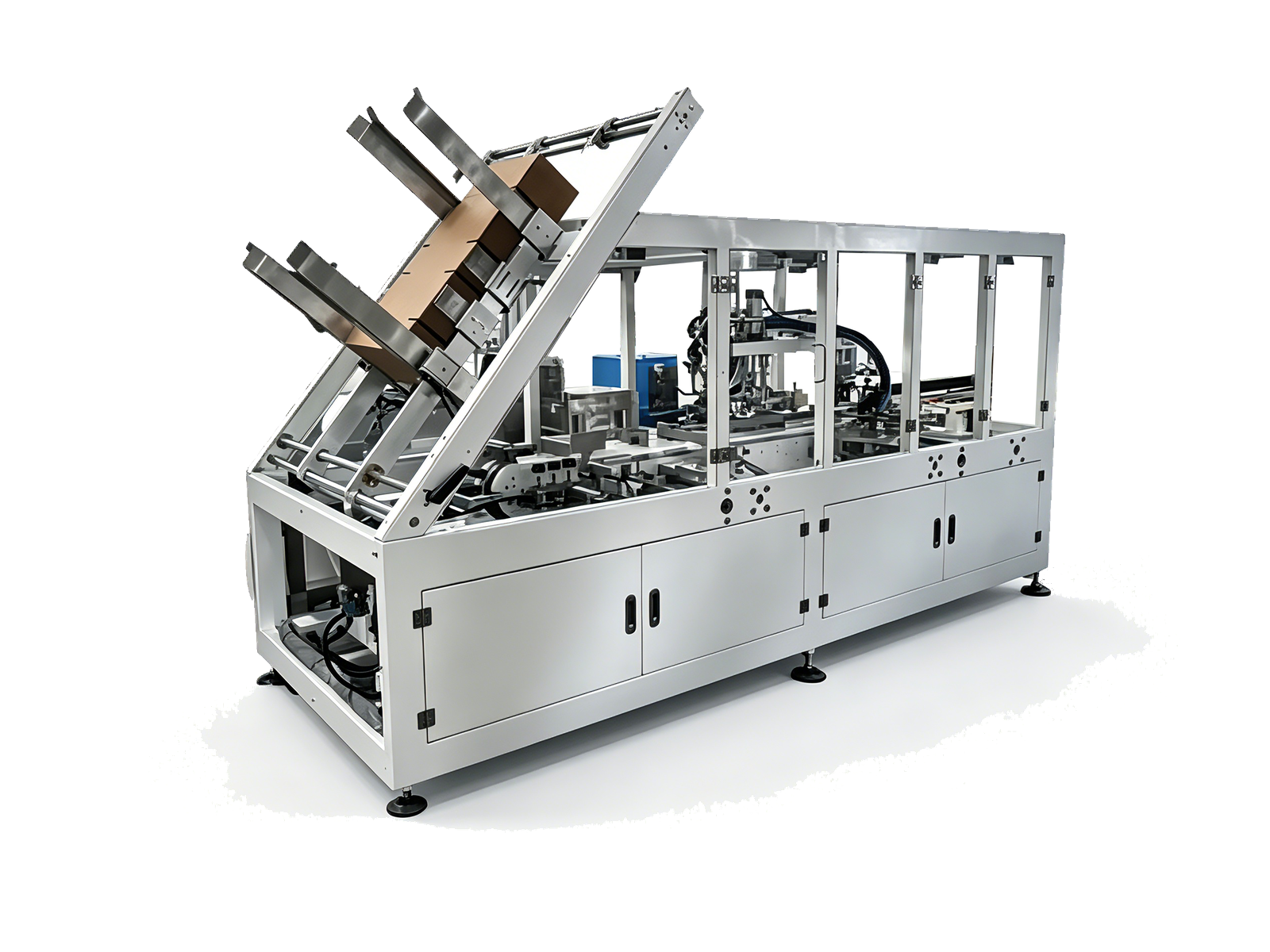
Wrap Around Case Packer — XT-WCP01
There is no erected carton to load. A flat one-piece blank is indexed under the collation, then folded up and around it. Because the blank ships and stores flat, the magazine holds far more cases per cubic metre of floor space than an erected-carton system ever can.
- No body gluing step — the blank becomes the case in a single wrap cycle
- Flat blank storage cuts board handling and magazine refill frequency
- Tight collation replaces internal dividers, reducing material cost
- The most board-efficient format in the range for can and bottle collations
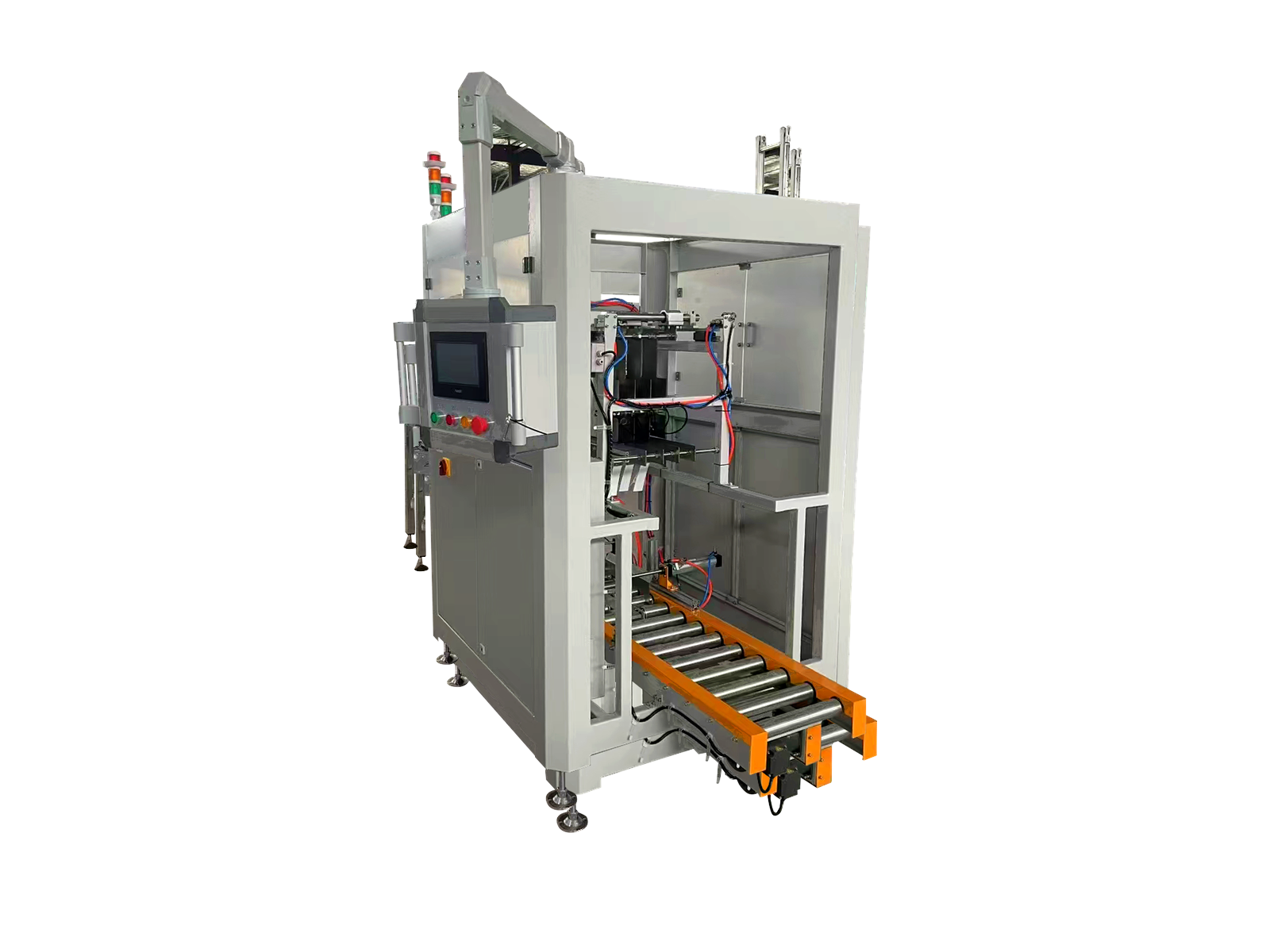
Gravity Drop Case Packer — XT-DCP01
The product is released through the open top of the carton and settles under gravity. There is no gripper head, which means there is no tooling to change when the product size changes — only the lane guides move. It is the lowest-maintenance machine in the range by construction.
- Fewest moving parts of any type — less to wear, less to service
- No gripper head means no product-specific tooling between SKUs
- Accepts rigid packs, sachets, blister cards and bagged goods
- Highest throughput per square metre when a short drop is acceptable
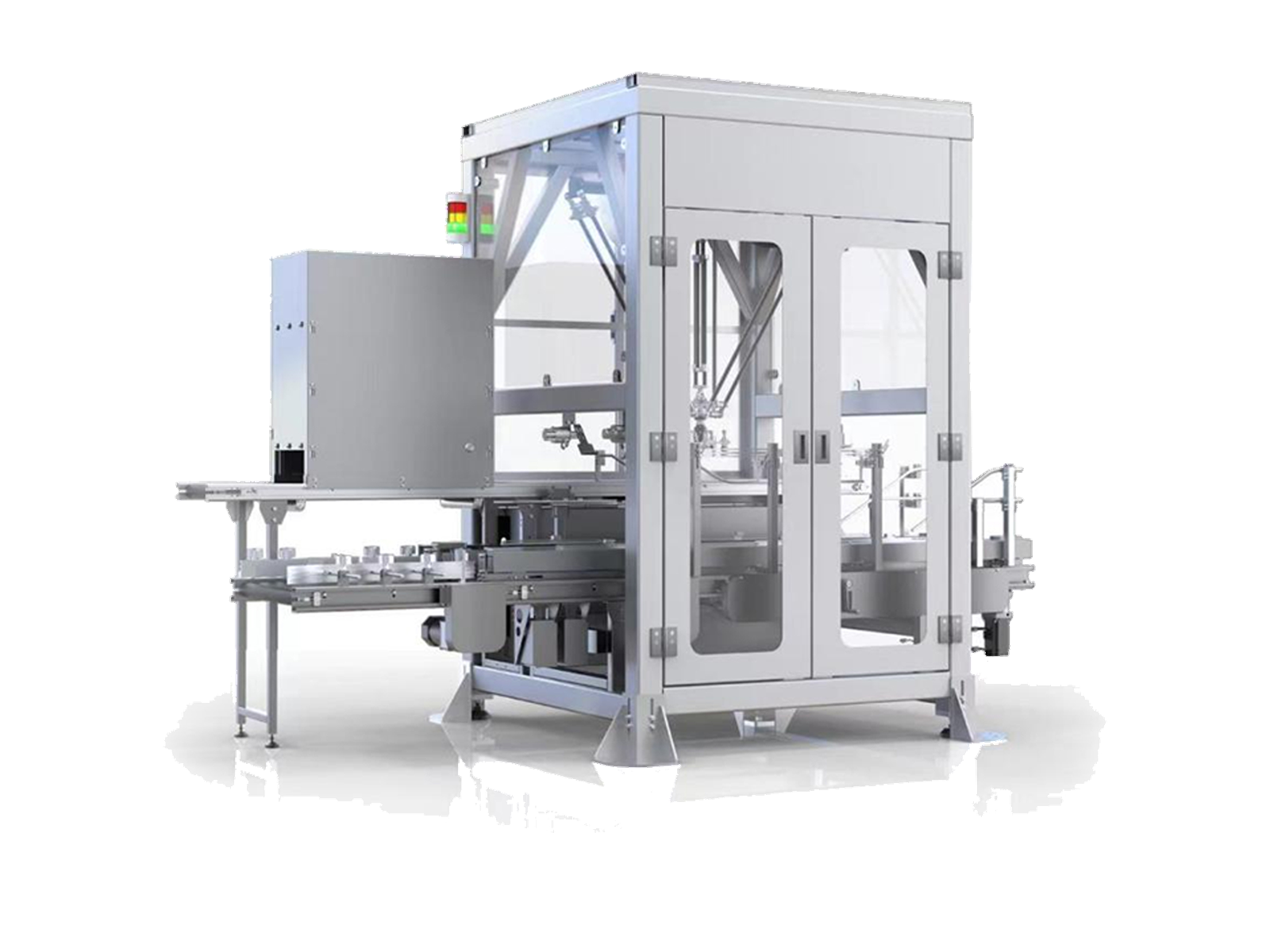
Delta Robot Case Packer — XT-DRP01
An overhead parallel-arm robot picks individual items from a loose flow and places them into the carton in a programmed pattern. Because every pick is independent, a gap or a misoriented item never stops the pattern — the robot simply works around it.
- Highest cycle rate in the range, built for single-file loose product
- Vision guidance removes the need for a mechanical pattern fixture
- Multi-compartment and mixed layouts are a recipe change, not a rebuild
- Independent picks mean no pattern interruption from upstream gaps
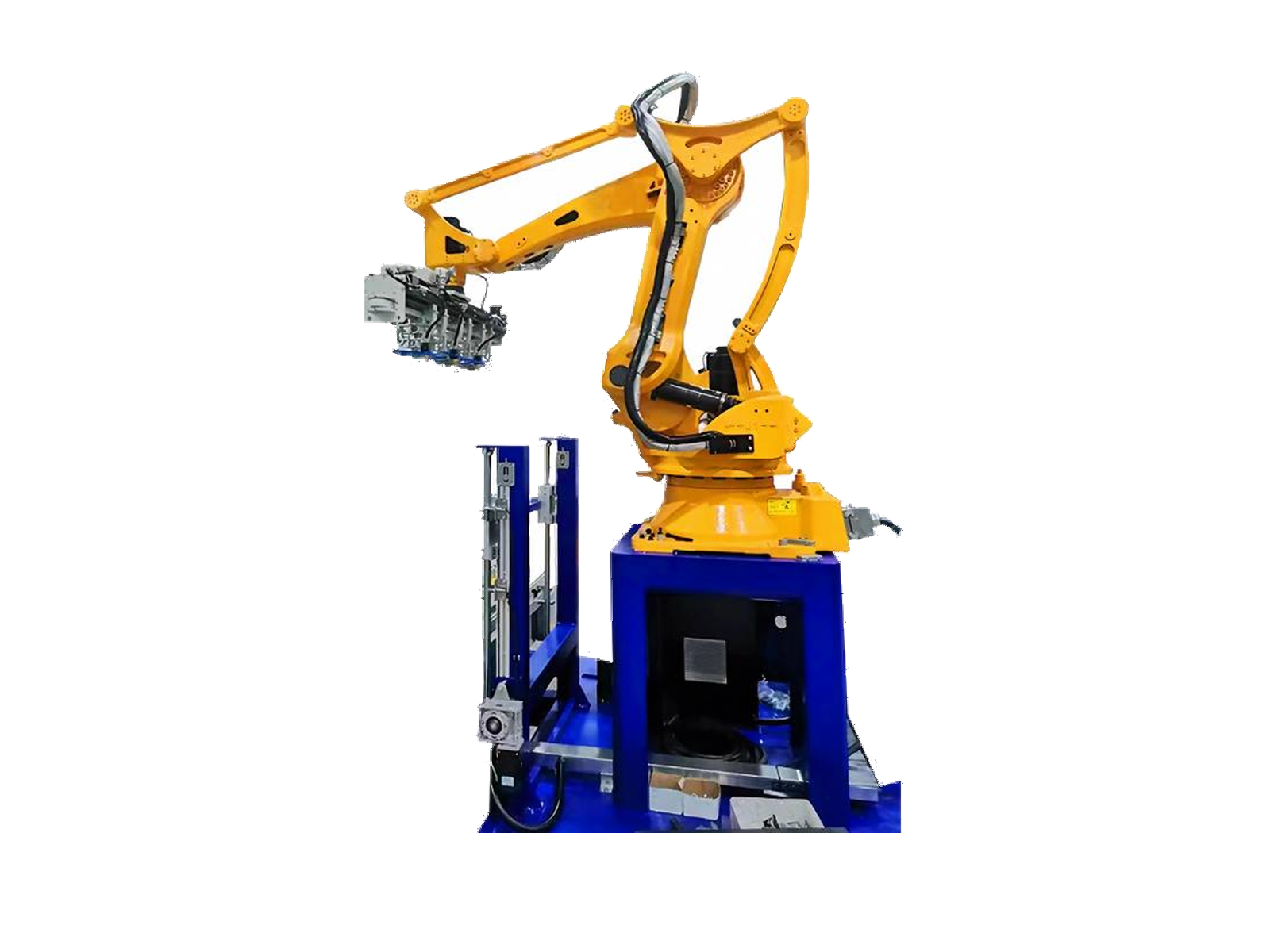
Robotic Case Packer — XT-RP01
A six-axis arm with task-specific end-of-arm tooling. Where a delta is limited by reach and payload, an articulated arm takes the heavier and the awkwardly shaped. When the product changes, the tooling changes — the machine does not.
- Absorbs a wide SKU mix on a single machine, which is the usual bottleneck
- Swap the end-of-arm tool, not the machine, when the product changes
- Carries weight and geometry beyond the reach of a delta robot
- Carton style is nearly unconstrained: RSC, tray, tote or returnable crate
Packing Line — XT-PL01
When the requirement is a line rather than a machine. Any of the five packers above becomes the heart of it, with erecting upstream and sealing downstream, all on one control system. The line model codes carry the packer code inside them, which is how you can tell from a quotation which principle is being supplied.
- Erecting, packing, sealing and discharge engineered as one train
- One control system across the whole line, not three separate HMIs
- Single supplier means one commissioning window and one point of contact
- Line codes embed the packer code — XT-TPL01 is a top-load-based line, etc.
The full certified model list
Every model below appears on our CE certificate as a Case Packer (the packing line is certified under its own name, Packing Line). Use the code on this page to match what appears on your quotation and on the machine nameplate.
| Machine typePrinciple | ModelBase code | CE certificate nameAs certified | CE model codesAll variants | CodesCount |
|---|---|---|---|---|
| Top Load Case PackerLowered from above | XT-TCP01 | Case Packer | XT-TCP01XT-TCP02 | 2 |
| Wrap Around Case PackerBlank wrapped around | XT-WCP01 | Case Packer | XT-WCP01XT-WCP02 | 2 |
| Gravity Drop Case PackerDropped through top | XT-DCP01 | Case Packer | XT-DCP01XT-DCP02 | 2 |
| Delta Robot Case PackerParallel-arm robot | XT-DRP01 | Case Packer | XT-DRP01XT-DRP02 | 2 |
| Robotic Case PackerArticulated arm | XT-RP01 | Case Packer | XT-RP01XT-RP02 | 2 |
| Packing LineIntegrated line | XT-PL01 | Packing Line | XT-TPL01XT-WPL01XT-DPL01XT-RPL01XT-PL01 | 5 |
From carton sample to commissioned machine
The machine is chosen last, not first. We start from the carton and the product, because those are the two things you cannot change cheaply.
Carton and product audit
You send a carton sample and the product. We check board grade, opening style and whether the carton can actually take the load.
Principle selection
We recommend one of the six types based on drop tolerance, pattern complexity and the cycle rate your line demands.
Layout and quotation
GA drawing, utility requirements, changeover concept and a quotation that names the certified model code.
FAT, delivery, commissioning
Factory acceptance test on your own cartons and product, then installation and operator training on site.
Six things, and we can name the machine
You do not need a specification document. These six answers are enough for us to recommend a type, a model code and a rough layout.
- Carton sample or drawingInternal dimensions, board grade, opening style
- Product and pack patternItem size, weight, how many per carton, layer arrangement
- Required outputCartons per minute or per shift — the real target, not the peak
- Product fragilityCan it take a drop, or must it be lowered in?
- Line contextWhat feeds the packer, what takes the sealed case away
- Site constraintsAvailable floor space, ceiling height, power and air supply
If you already know which principle you want, say so and send the carton — we will go straight to the model code and layout. If you do not, send the carton and the product anyway: the choice between top load, drop, wrap and robot is usually decided by the carton and the product’s tolerance, not by preference.
We will tell you when a carton needs changing. It is better to hear that before the machine is built than after — a carton modification is cheap, a machine modification is not.
Where the case packer sits
The packer is never the whole line. It sits between the filling equipment that feeds it and the sealing and palletising that follow. Getting those interfaces right is most of the commissioning work.
If you buy the whole train from us as a Packing Line, these interfaces are one engineering scope and one control system. If you buy only the packer, we will still supply the interface definition for the equipment either side — that is where most integration problems are born.
The ones asked before every order
How do I choose between top load, drop load and wrap around?
Start with the product, not the machine. If it cannot take a short drop — glass, filled liquids, soft containers — it has to be lowered in, which means top load. If it tolerates a drop and you want the simplest mechanics, use gravity drop.
If board cost is the pressure point and the product collates tightly, wrap around uses the least board because the blank is a single flat piece with no separate body. The carton style usually decides this before anything else does.
When is a delta robot better than a conventional packer?
When the pack pattern is the hard part. A conventional packer fills one fixed pattern; a delta robot picks items individually and can build any pattern you program. If you fill multi-compartment cartons, mix SKUs in one case, or change the layout more often than the product, the delta earns its cost.
The delta is also the fastest type in our range, so it wins when cycle rate is the binding constraint and the items are light enough for a parallel-arm robot.
What does the “XT-…PL01” line code mean?
The line codes embed the packer they are built around. XT-TPL01 is a top-load line, XT-WPL01 a wrap-around line, XT-DPL01 a drop line and XT-RPL01 a robotic line. Plain XT-PL01 is the line designation itself.
So you can read the principle off the quotation: if the code contains TPL, the heart of that line is a top load packer.
Can one machine handle several carton sizes?
Yes, within a range — and the mechanism decides how much changeover work it takes. A gravity drop machine has no gripper head, so a size change is mostly lane guide adjustment. A robotic machine changes recipe, not hardware, for most size changes.
The practical limit is the carton, not the machine: a range that spans very different board grades or opening styles will usually need two machines rather than one.
Is every model on this page CE certified?
All 15 codes in the model table are covered. The five case packer types are certified under the name Case Packer; the integrated line is certified as Packing Line. If a quotation shows a code that is not in that table, ask us before you sign — it will not be a certified variant.
Do I have to change my carton?
Usually not, and we will say so plainly if you do. The packers are built around standard carton styles — RSC, wrap-around blank, tray, display carton — because those are what carton suppliers already produce economically.
When a change is needed it is normally small: a flap dimension, an opening style, or board grade. We will tell you before the machine is built, because a carton change at that stage costs a fraction of a machine change later.
Send the carton. We will name the machine.
One carton sample and six answers is enough to come back with a machine type, a certified model code and a layout. No specification document required.